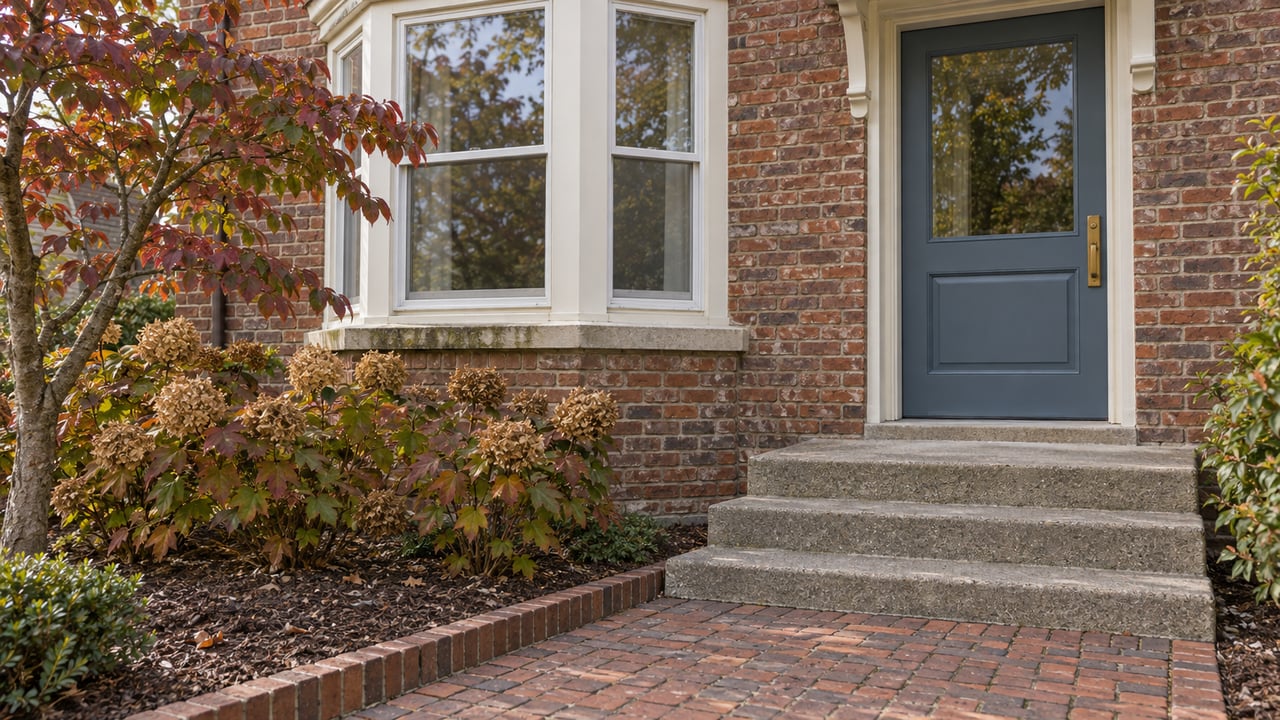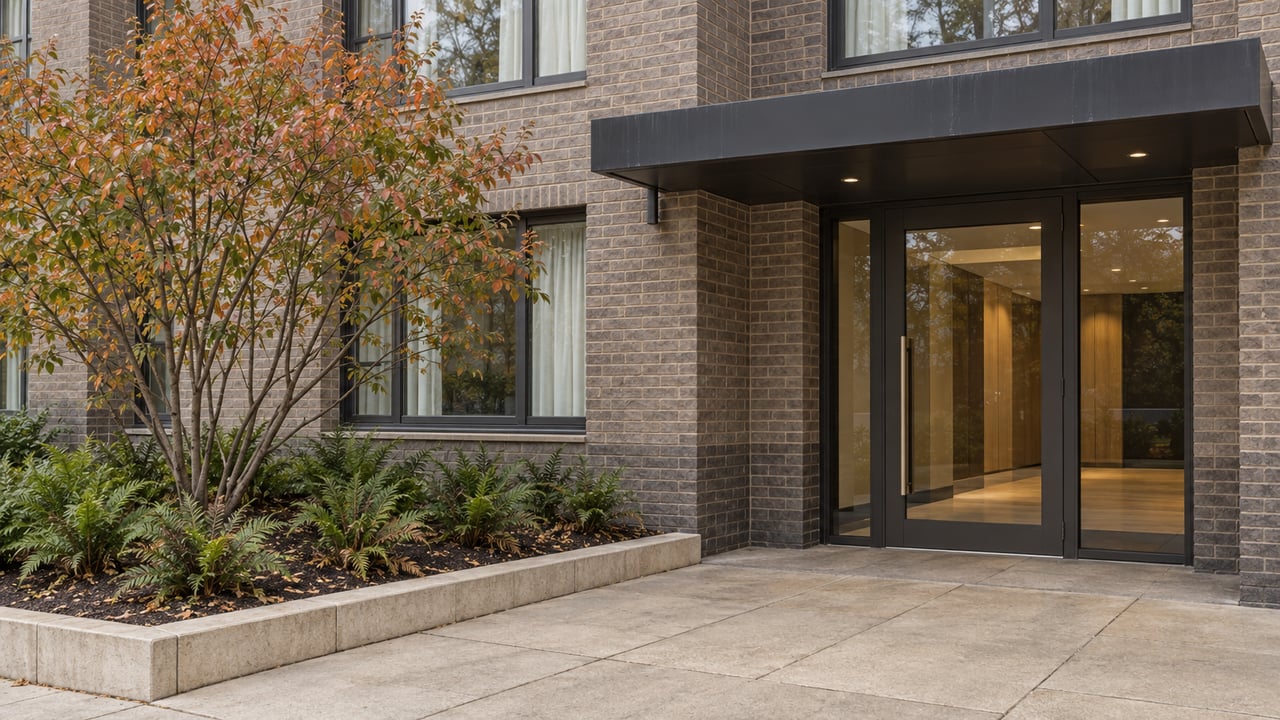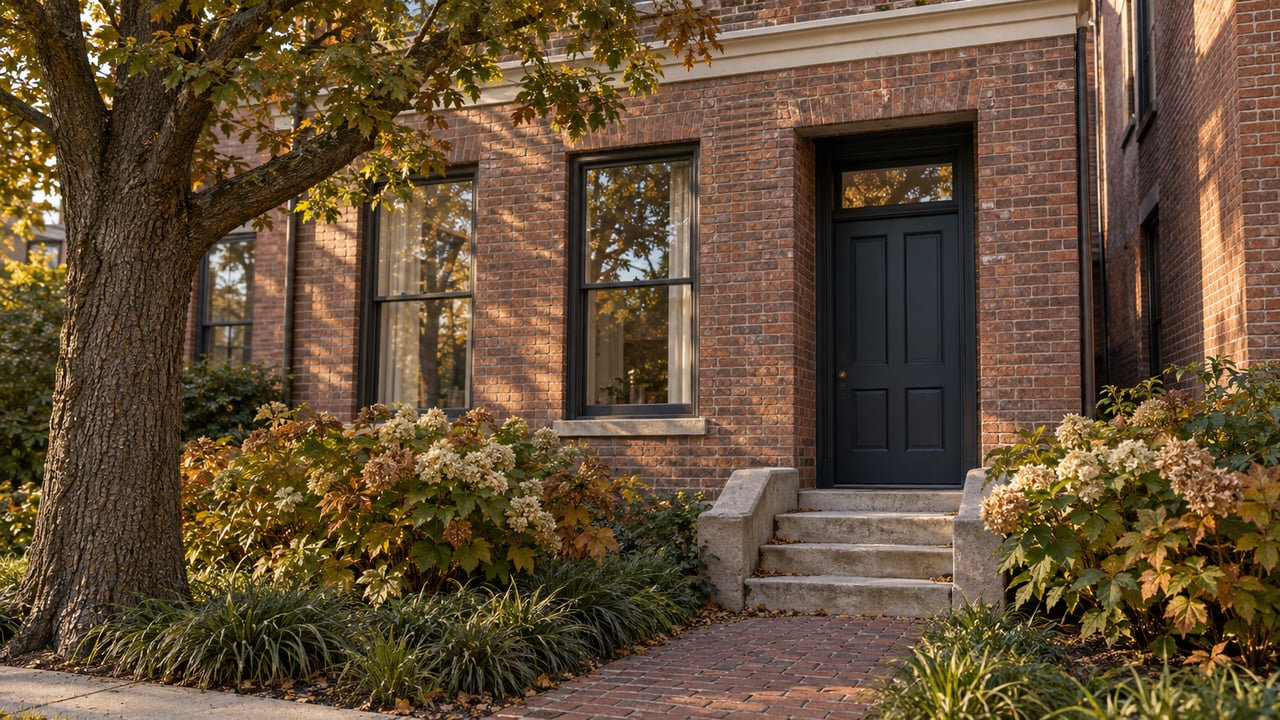
A buyer touring Old Town on the same Saturday might see two listings that share a zip code and not much else. The first is a fully restored 1790s rowhouse on a brick sidewalk, its shutters and window muntins approved down to the paint sheen by a city board before the seller ever touched them. The second, a mile north, is a condo in a thirteen-story tower with underground parking, a resident lounge, and an elevator that didn't exist five years ago. Both get called Old Town on the listing sheet. Only one of them could legally exist in its current form on the other's block.
That difference isn't about money, taste, or which builder got there first. It's a property line most buyers never see, running along a short residential street called Bashford Lane, that shapes what kinds of new construction can happen.
The line nobody points to on a map
Alexandria has two locally regulated historic districts, the Old and Historic Alexandria District and the Parker-Gray District, both overseen by the city's Board of Architectural Review. The BAR has to sign off on new construction and on exterior alterations visible from a public street inside those boundaries, as the City of Alexandria explains; this includes everything from a shed over 65 square feet to a fence to a parking structure, as the city's zoning page specifies. The Old and Historic Alexandria District, the one most people mean when they say "the historic district," runs from Hunting Creek at the city's southern edge up to Bashford Lane in the north, and from the Potomac River east to roughly the King Street Metro on the west, according to the city's own historic preservation office.
North of Bashford Lane sits Old Town North, a neighborhood that shares Old Town's name, its zip code, and its waterfront, but sits mostly outside that BAR jurisdiction. A homeowner there can generally renovate under standard city permitting rules without a Certificate of Appropriateness. A developer can propose a mid-rise building without first convincing a design review board that a glass curtain wall belongs next to a Federal-style townhouse.
That administrative distinction is one of the forces shaping where new housing appears in Old Town.
What's actually rising north of that line
Look at where Alexandria's new-construction condo pipeline has actually landed over the past two years, and the pattern is hard to miss.
| Project | What it is | Where |
|---|---|---|
| TideLock | $96 million redevelopment of three 1980s office buildings at 1033 N. Fairfax St., once home to the American Physical Therapy Association, into 169 rental apartments and 65 for-sale condos | Old Town North |
| Venue | 122 condos in a 13-story tower plus 41 townhomes at the former Crowne Plaza Hotel site, 925 N. Fairfax St. | Old Town North |
| Towngate North | Two former office buildings being converted into roughly 80 condos on Slaters Lane | Old Town North |
| Carr Properties conversion | A vacant office building becoming a 250,000-square-foot, eight-story residential community, studios to three bedrooms, roughly a third with Potomac views | Old Town North |
| Former power plant site | 16-acre former Potomac River Generating Station, dormant since 2012, preliminary plans for 1,500 to 2,000 residential units | Old Town North |
The Residences at TideLock had already crossed 45 percent sold by April 2026, according to Alexandria Living Magazine, before the building had even finished delivering. That kind of absorption on a 65-unit building doesn't happen because Old Town North has better views than the historic core. It happens because it's one of the only places in the neighborhood where a building like that is allowed to exist in the first place.
Even outside BAR's reach, these conversions aren't simple. Projects like the Carr Properties conversion or Towngate North still have to work through a mismatch between the office building's existing bulk and what would normally be allowed for housing on that lot. It's real friction, just a different kind than a homeowner two blocks south faces trying to get a shutter approved.
The furthest-out piece of this pipeline is the former power plant site, and it's worth being honest about the timeline. The city held its second community input session on that redevelopment on April 14, 2026, with preliminary sketches suggesting 1,500 to 2,000 units, but City Council isn't expected to vote until spring 2027, and the earliest residential units wouldn't likely deliver until 2031 or 2032. It reinforces the pattern rather than changing anything for a buyer searching today.
What the historic core allows instead
South of Bashford Lane, new construction doesn't disappear. Thirteen four-level townhouses under construction at the corner of Cameron and West streets, priced from $2.2 to $2.4 million, are new build, but they're rowhouse-scaled, brick-clad, and sized to match the block, the kind of infill a design review board can approve without a fight.
The rare exception that actually breaks the pattern is Robinson Terminal North, an 88-condo project split across two buildings at 500 and 501 N. Union St., with 206 total parking spaces. Getting new mass built on a historic waterfront parcel took a negotiated trade under the city's Waterfront Plan: the developer agreed to build public park space connecting Oronoco Bay Park and Founders Park in exchange for the density. Environmental concerns on the site have complicated the process further. It's the kind of deal that takes years and a specific public benefit to pull off, not something a typical parcel owner can replicate.
When Alexandria floated extending a bonus-height provision deeper into the historic core in 2022, the pushback from preservation advocates was immediate, a reminder of how much resistance any attempt to bring towers inside OHAD's boundaries actually faces. The message from that fight is the same one Robinson Terminal North's long approval process sends: redevelopment inside the historic district isn't impossible, it's just expensive, slow, and rare enough that it doesn't change the basic math for most sellers or buyers.
Why the median doesn't tell you which market you're in
Citywide, Redfin's three-month window ending June 2026 put Alexandria's median sale price at $758,000, up 9.4 percent year over year. That's a tight, competitive market by any measure. But narrow the lens to Old Town condos specifically, and a June 2026 market snapshot put the median at $994,900, with individual units spanning $214,900 to $2.2 million.
That spread isn't Old Town being unusually diverse in taste or budget. It's two zoning regimes being reported under one neighborhood name. A $2.2 million penthouse in a new tower and a $350,000 studio in a decades-old building can both sit inside the same "Old Town condo" category on a spreadsheet while being subject to completely different rules about what happens to the building around them.
That split shows up in appreciation, too. A 2026 regional forecast built on Northern Virginia Association of Realtors and George Mason University data put Alexandria's overall home price growth at a nation-leading 4.2 percent for the year, while flagging condos specifically as the softest segment locally, at roughly 1.1 percent. That's not a story about condo buyers losing interest. It's what happens when nearly every unit of new multifamily supply lands in one geographically small pocket north of Bashford Lane at the same time, while the historic core's single-family and rowhouse stock stays fixed because it structurally cannot expand.
What this means if you're actually searching
If new construction, an elevator, and a deeded parking space are on your must-have list, your real search radius in Old Town is smaller than the neighborhood boundary suggests. It's effectively Old Town North, plus the rare negotiated exception like Robinson Terminal North.
If it's the 1790s rowhouse and the walk to King Street you're after, you're buying into a design review process that will follow you as an owner too. Any future window replacement, fence, or addition visible from the street will need the same Board of Architectural Review sign-off the current owner has been navigating.
Neither path is the wrong one. But they're different products wearing the same neighborhood name, and knowing which side of Bashford Lane a listing sits on tells you more about what you're actually buying than the price per square foot does.
A few questions this raises
Could my Old Town home ever be redeveloped into something bigger? It depends almost entirely on which side of the line it sits on. Outside the district, in Old Town North, that path is considerably shorter.
How do I find out if a specific address is inside the historic district? The city maintains a Historic Preservation Map viewer through its Department of Planning and Zoning, and preservation staff can confirm a property's status directly. It's worth checking before you assume a lot's future potential either way.
Does the future power plant redevelopment change anything for buyers right now? Not yet. With a council vote not expected until spring 2027 and first units years beyond that, it's a signal about where the next wave of Old Town North supply is headed, not a factor that should shift a search happening today.
If you're trying to figure out which side of this line actually fits how you want to live, or what a property's position relative to it might mean for your own renovation plans down the road, that's exactly the kind of question worth a real conversation. Kristen Jones Real Estate has spent years walking both sides of Bashford Lane with clients. Request your complimentary home valuation and we'll tell you plainly which market you're actually standing in.
This article is general information, not legal, tax or financial advice. Consult a qualified professional about your situation.