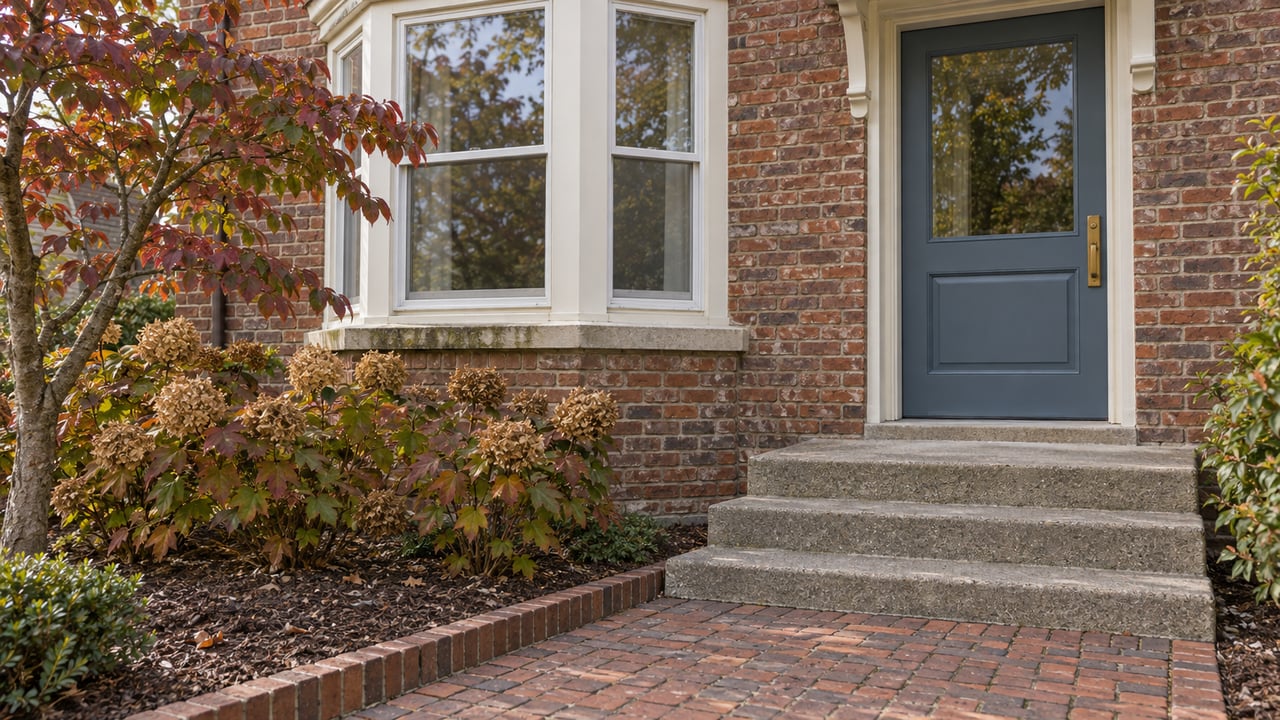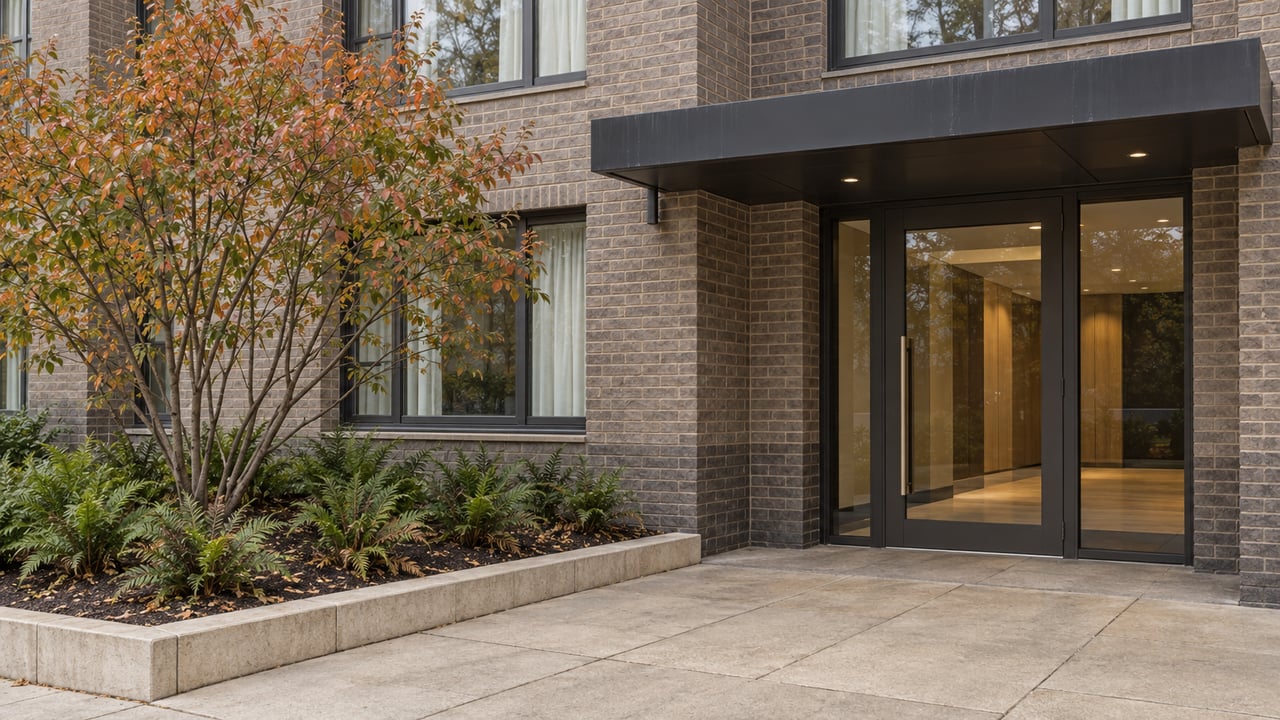
The friction shows up in the same place every time. A buyer walks into a first offer conversation quoting the citywide average, and within ten minutes they realize the number they memorized has almost nothing to do with the property in front of them. A rowhouse on Prince Street, a Del Ray bungalow, and a two-bedroom at Canal Place all sit inside the same "Alexandria market," and in the summer of 2026 they are three different stories.
The headline reads well enough. In June 2026, Alexandria's average sale price came in at $850,041, up 1.1% year over year, on 205 closed transactions and 376 homes on the market at month's end. Underneath that single line, though, the three property segments moved in three directions at once, and the reasons they moved matter more than the numbers.
| June 2026, Alexandria | Avg. sale price | YoY change |
|---|---|---|
| Detached single-family | $1,404,691 | −2.7% |
| Attached (townhouse, rowhouse, condo combined) | $719,732 | −0.5% |
| Condominiums alone | $468,466 | −6.2% |
| Citywide | $850,041 | +1.1% |
Source: MarketStats by ShowingTime, reported by ALXnow, July 13, 2026.
The thesis is simple. Alexandria in mid-2026 is not one market with one temperature. It is three markets with three different mechanisms, and the mechanism, not the median, tells you where a buyer actually has leverage.
Detached: a supply story pretending to be a price story
At a glance the detached segment looks soft. Average price down 2.7% year over year, transactions down across the city. The instinct is to call it a cooling.
That reading misses the mechanic. The NVAR and George Mason mid-year forecast, released July 11, 2026, projects Alexandria detached inventory to contract another 9.1% this year, with unit sales easing 6.0%. Fewer homes are reaching the market, not fewer buyers reaching for them. The Federal Housing Finance Agency estimates the mortgage "lock-in effect" cut national home sales by roughly 1.7 million between 2022 and 2024, with about half of U.S. homeowners still holding notes below 4%. In a city where the typical detached seller is trading up rather than exiting, that math keeps the best stock off the MLS.
What a buyer sees on the ground: a thin trickle of listings in Rosemont, North Ridge, Beverly Hills, and Del Ray, most of which sell quickly if they are prepared properly. The 2.7% drop in average price is a mix-shift artifact, not a discount. Fewer $2M+ closings in a given month pull the average down without moving a single individual house's value. Bright MLS chief economist Lisa Sturtevant, quoted in the June regional summary, described the mid-Atlantic as a market driven by higher-end sales, with higher-income and repeat buyers most active while first-time buyers stay sidelined. In Alexandria, that translates to detached homes going under contract on their strengths and sitting on their weaknesses. Condition, staging, and pricing discipline are doing the sorting.
Leverage assessment for the detached buyer: minimal. If the house is prepared, expect competition. If it is not, expect it to still be there in thirty days, and that is where a well-timed second look is worth more than an aggressive first offer.
Condos: where the fee line moves the sticker line
The condo story is the one most buyers get wrong.
Condo average price in June 2026 came in at $468,466, down 6.2% year over year, the largest drop of any segment. In the same forecast, NVAR and GMU project condo unit sales to jump 15.6% in 2026 on a 31% surge in condo inventory. Prices down, transactions and supply up. That combination usually signals a segment losing altitude. In Alexandria it signals something else.
Terry Clower, director of the George Mason Center for Regional Analysis, has pointed directly at the mechanism: higher fees charged by condo associations, reflecting three years of accumulated inflation on labor, insurance, and reserve contributions, are what is holding condo appreciation back both citywide and regionally. He does not describe it as a catastrophe. He describes it as a drag.
For a buyer, that drag is real money. Alexandria condo and HOA fees commonly run between $400 and $1,200 per month depending on building age, amenities, and location. At the top of that range, the monthly fee alone consumes roughly $200,000 of borrowing capacity under standard debt-to-income underwriting. A $500,000 condo with a $950 fee and the fiscal 2026 real estate tax rate of $1.135 per $100 of assessed value carries an all-in monthly cost that often exceeds a $650,000 townhouse without the association. That is the pool of buyers a condo listing is competing for, and it is the reason condo sellers are trimming ask prices while townhouse sellers are not.
The reading for a buyer: the sticker price of an Alexandria condo in 2026 is negotiable in a way it has not been in five years, but the fee is the number that decides whether the deal actually works. Two units with identical asking prices in Old Town North can have a $6,000 annual delta in carrying cost. Read the resale certificate before you read the tax record.
Townhouses and rowhouses: the balanced middle
The attached segment, taken as a whole, moved the least. Combined attached average was $719,732 in June, essentially flat at −0.5%. The mid-year forecast projects townhome prices up 2.3% on the year, sales up 2.3%, and inventory up just 0.3%.
Everything about that segment reads as balance. Supply is not contracting the way detached is, so buyers see more options. It is not flooding the way condos are, so sellers hold pricing. The typical Alexandria townhouse or rowhouse buyer in 2026 is a household trading up from a condo who has watched their equity plateau and decided they would rather own the walls than pay them. The Old Town rowhouse buyer at $1.5M and the Cameron Station townhouse buyer at $800,000 are the same trade in two different price tiers.
Leverage assessment: mixed, and highly property-specific. A rowhouse in the Old and Historic Alexandria District that needs exterior work carries embedded Board of Architectural Review timing risk, which shows up in the appraisal and inspection cycle. A turnkey townhouse in a Metro-served pocket like Potomac Yard or Carlyle still transacts closer to list. Reading the specific property, not the segment, is the entire game here.
Where the leverage actually sits
Alexandria is running about one month of supply overall, which by traditional measure keeps sellers in the stronger seat. That is true, and it is also incomplete. The composition of that supply is where a mid-2026 buyer finds room to work.
The condo shelf is deeper than it has been in years, and the fee-driven affordability gap is what is pulling those prices down, not weakness in the neighborhoods themselves. A buyer who can absorb a $700 to $900 monthly fee is buying into a segment where sellers are actively pricing to move. The detached shelf is thin, and the price you see is what the seller means. The attached middle is where preparation and inspection detail earn or lose the discount.
One local practice note worth carrying into any of these three markets: in a city of pre-1950 housing stock, the pre-offer inspection has quietly become the standard move for buyers who want to compete without waiving the underlying condition review. Aging galvanized supply lines, undisclosed prior renovation work, and party-wall moisture patterns are common enough on Old Town and Del Ray transactions that a $600 upfront inspection often pays for itself in the negotiation window it preserves.
A short FAQ
Why is the citywide average up when every segment average is down or flat? Mix shift. June 2026 had a larger share of detached closings in the total sales mix than June 2025, and detached homes carry the highest average. The composition changed, so the aggregate rose even as each segment softened.
Are federal workforce reductions showing up in Alexandria prices yet? Federal employment across the Washington metro fell by roughly 64,000 jobs between December 2024 and April 2025, per data cited in the NVAR and GMU mid-year update. So far, Alexandria's price data has absorbed the pressure without breaking. GMU's Terry Clower attributes that to pent-up demand and long-term confidence in the region. It remains the variable to watch through year-end.
Where does a value-conscious buyer look right now? The condo segment is where price flexibility is highest and where careful reading of the fee, the reserve study, and the resale certificate matters most. The detached segment is where the willingness to wait for the right listing beats the willingness to overbid on the wrong one.
If you are planning a move in or out of one of these three segments in the next twelve months, the right first step is a conversation about your specific block, your specific building, and your specific timing. Reach out to Kristen Jones Real Estate to request your complimentary home valuation and a segment-level read on where your property sits inside a market that no longer moves as one.