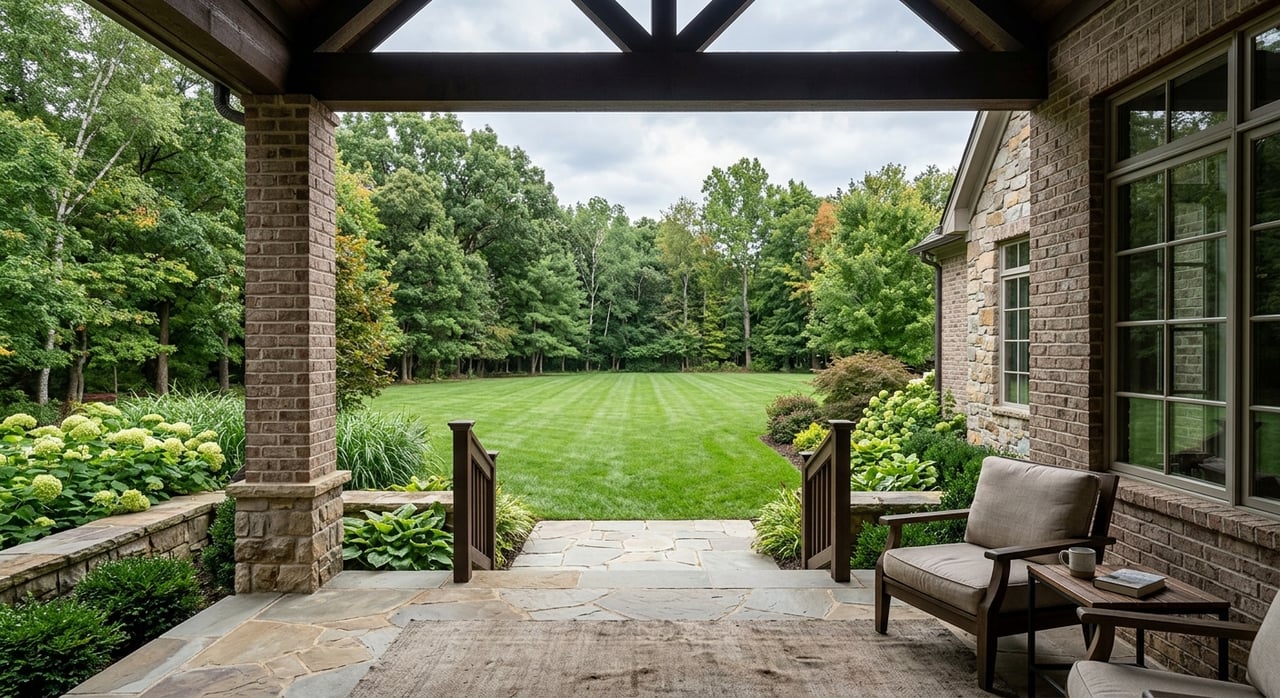
Looking for more space in Northern Virginia? Great Falls stands out because land is not just a bonus here. It is part of the lifestyle, the setting, and often the reason buyers move. If you are wondering what daily life is really like on a larger property, this guide will walk you through the tradeoffs, logistics, and appeal of living on more land in Great Falls. Let’s dive in.
Why Great Falls Feels Different
Great Falls is defined by space. According to the U.S. Census QuickFacts for Great Falls, the community has 15,953 residents across 25.36 square miles, with about 629.1 people per square mile. That lower-density pattern helps explain why homes often feel more separated and private than in many closer-in Northern Virginia communities.
The same Census data shows that 95.0% of the housing stock is owner-occupied, with a median value of owner-occupied homes at $1,411,000. In practical terms, Great Falls is a market where buyers are often choosing not only a home, but also a larger parcel, more breathing room, and a more estate-style setting.
County planning guidance reinforces that identity. Fairfax County planning documents describe Great Falls as a rural or semi-rural area with undeveloped land, farms, residential estates, and large-lot subdivisions, with future development largely centered on 2- to 5-acre single-family lots.
What “More Land” Usually Means
In Great Falls, more land often means more privacy. Homes are typically set farther apart, and the large-lot framework creates a quieter, less compact feel than you might find in mixed-use or more walkable suburban areas.
That said, more land does not automatically mean unlimited flexibility. Fairfax County zoning rules generally allow one dwelling per single-family lot unless an accessory living unit is approved. So while a large parcel may offer more outdoor space and separation, it does not usually function like a site intended for higher-density redevelopment.
For many buyers, that is exactly the point. Great Falls is designed to preserve large-lot density and rural character, not to become a denser suburban center.
The Natural Setting Is a Major Draw
One of the biggest benefits of living on more land in Great Falls is how closely everyday life can connect to the outdoors. More than one-third of the sector is preserved in open space and parkland, according to Fairfax County planning materials. Georgetown Pike is also identified as a Virginia Byway, which adds to the area’s scenic identity.
If you enjoy trails, river views, or simply a more wooded backdrop, Great Falls delivers. Great Falls Park offers 15 miles of hiking trails, including routes along the Potomac River and the cliffs of Mather Gorge. The park notes that trails are packed dirt and gravel rather than paved, which fits the area’s more natural, less manicured feel.
Riverbend Park adds another 12-plus miles of trails across 418 acres of forest and meadows along the Potomac River. The park also offers seasonal canoe and kayak rentals, guided trips, and fishing access, making it a meaningful part of the local outdoor lifestyle.
Equestrian use is also part of the landscape. Turner Farm includes almost 40 acres of open fields and public riding facilities, which reflects another dimension of how land is used and enjoyed in Great Falls.
The Tradeoffs of Owning a Larger Lot
A larger property can be beautiful, but it also asks more of you. In Great Falls, county planning guidance points to steep slopes, stream valleys, natural drainage, vegetation preservation, and view shed protection as important site considerations. Those factors can affect where and how you landscape, build, or make changes to the property.
In other words, more land can come with more complexity. A parcel may look expansive, but not every section of it will necessarily be easy to improve or maintain. The environmental features that make Great Falls so appealing are often the same features that require more careful planning.
Utility setup can also matter. According to Fairfax County Health Department guidance, if a property uses a private well or onsite sewage system, there are maintenance responsibilities to know before you buy. Private well water should be tested annually, and most onsite sewage systems should be pumped at least once every five years.
That is a real lifestyle difference from homes connected fully to centralized utility systems. If you are moving from a denser neighborhood, this is one of the biggest adjustments to understand early.
Accessory Living Space Has Rules
Some buyers look at larger lots and immediately think about guest houses, multigenerational living, or detached flex space. In Great Falls, those ideas may be possible, but they are regulated.
Fairfax County’s accessory living unit rules state that an ALU must be subordinate to a single-family detached home. Detached ALUs can be approved only on lots of at least two acres and require a special permit.
The key takeaway is simple: if you want a property that may support an accessory living arrangement, you should confirm the lot size, the current approvals, and what is realistically allowed before making assumptions. Larger land opens possibilities, but those possibilities still sit within county rules.
Daily Life Usually Means More Driving
Great Falls offers space and privacy, but it is not built around a transit-oriented lifestyle. Fairfax County planning documents note public transportation service on Route 7, with only infrequent service on Old Dominion Drive and Great Falls Road.
Fairfax County is also studying an Enhanced Public Transit Corridor on Route 7, but that corridor-level plan is different from having convenient local transit throughout a large-lot residential community. For most households, daily life in Great Falls remains car-based.
That tracks with Census data showing a mean travel time to work of 33.5 minutes. If you choose Great Falls, you are often choosing a lifestyle with more driving, more advance planning, and fewer nearby mixed-use conveniences than in denser neighborhoods closer to the urban core.
Who Great Falls Land Appeals To
Great Falls can be a strong fit if you value privacy, natural surroundings, and a home setting where the lot itself plays a major role in your quality of life. Some buyers want room for outdoor living, quieter surroundings, or a less compact neighborhood pattern. Others are drawn to the visual calm that comes from mature trees, open space, and wider separation between homes.
It can also appeal if you are comfortable with a more hands-on ownership experience. Larger properties often involve more maintenance, more site-specific considerations, and more reliance on driving for daily errands and routines.
The right fit comes down to priorities. If your goal is more land, more privacy, and a scenic setting, Great Falls offers a distinct version of Northern Virginia living that is hard to replicate.
What Buyers Should Check Carefully
Before buying on a larger lot in Great Falls, it helps to look beyond the house itself. You will want to understand how the property functions day to day, not just how it looks during a showing.
A few smart questions to ask include:
- Is the home served by a private well, onsite sewage system, or centralized utilities?
- Are there steep slopes, drainage areas, or environmental constraints on the lot?
- What parts of the land are actively maintained today?
- If you want an accessory living unit, what does the county allow on this specific parcel?
- How will the commute and daily driving pattern fit your routine?
These are the kinds of details that shape ownership over time. A thoughtful buying process can help you choose a property that matches both your goals and your comfort level.
If you are exploring larger-lot living in Great Falls or weighing it against other Northern Virginia options, working with a local advisor can help you think through not just the home, but the full lifestyle picture. Kristen Jones Real Estate offers a thoughtful, concierge-style approach that helps you evaluate what matters most and move forward with clarity.
FAQs
What is it like living on more land in Great Falls, VA?
- Living on more land in Great Falls usually means more privacy, more separation between homes, and closer access to natural scenery, but it also often means more maintenance, more driving, and more property-specific planning.
How large are lots typically planned in Great Falls, VA?
- Fairfax County planning guidance says future development in Great Falls is largely centered on 2- to 5-acre single-family lots to help preserve the area’s large-lot density and rural character.
Are there outdoor amenities near larger properties in Great Falls, VA?
- Yes. Great Falls Park has 15 miles of hiking trails, Riverbend Park has 12-plus miles of trails and river access, and Turner Farm offers public equestrian facilities.
Do Great Falls, VA homes on larger lots sometimes use wells or septic systems?
- Yes. Some properties use private wells or onsite sewage systems, and Fairfax County says private well water should be tested annually while most onsite sewage systems should be pumped at least once every five years.
Can you add an accessory living unit on a large lot in Great Falls, VA?
- Possibly, but Fairfax County regulates accessory living units. Detached ALUs can be approved only on lots of at least two acres and require a special permit.