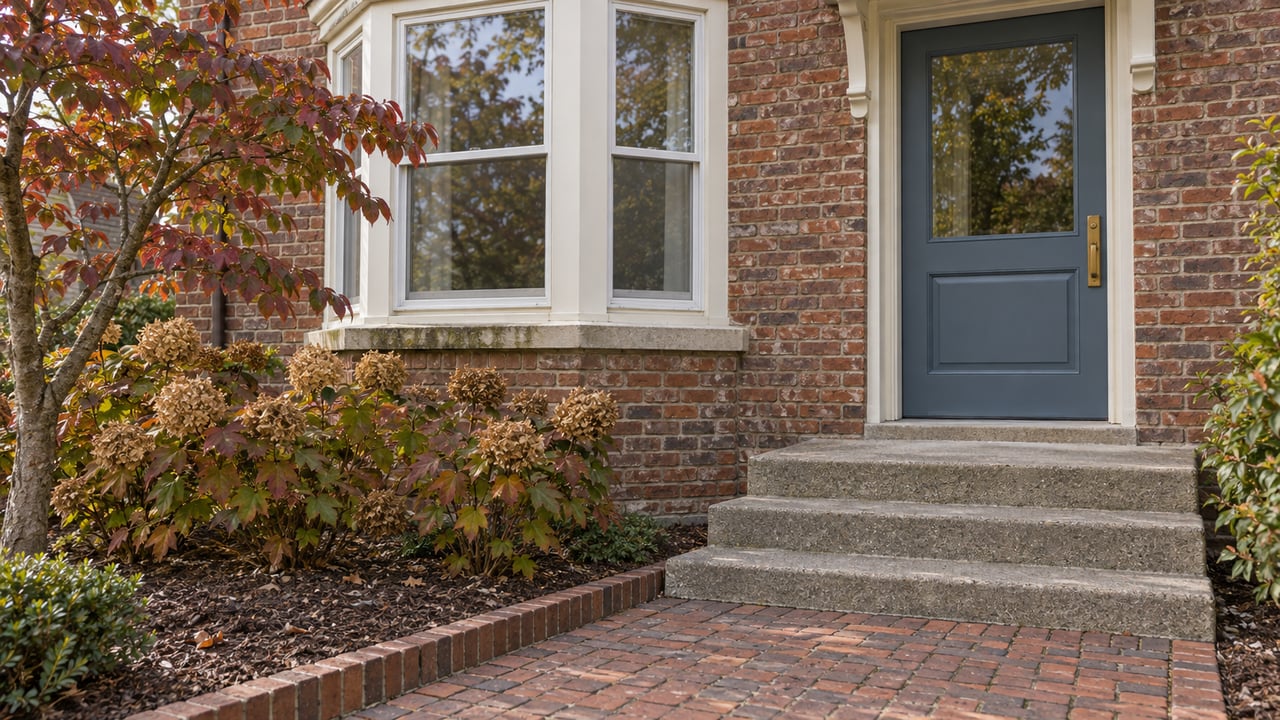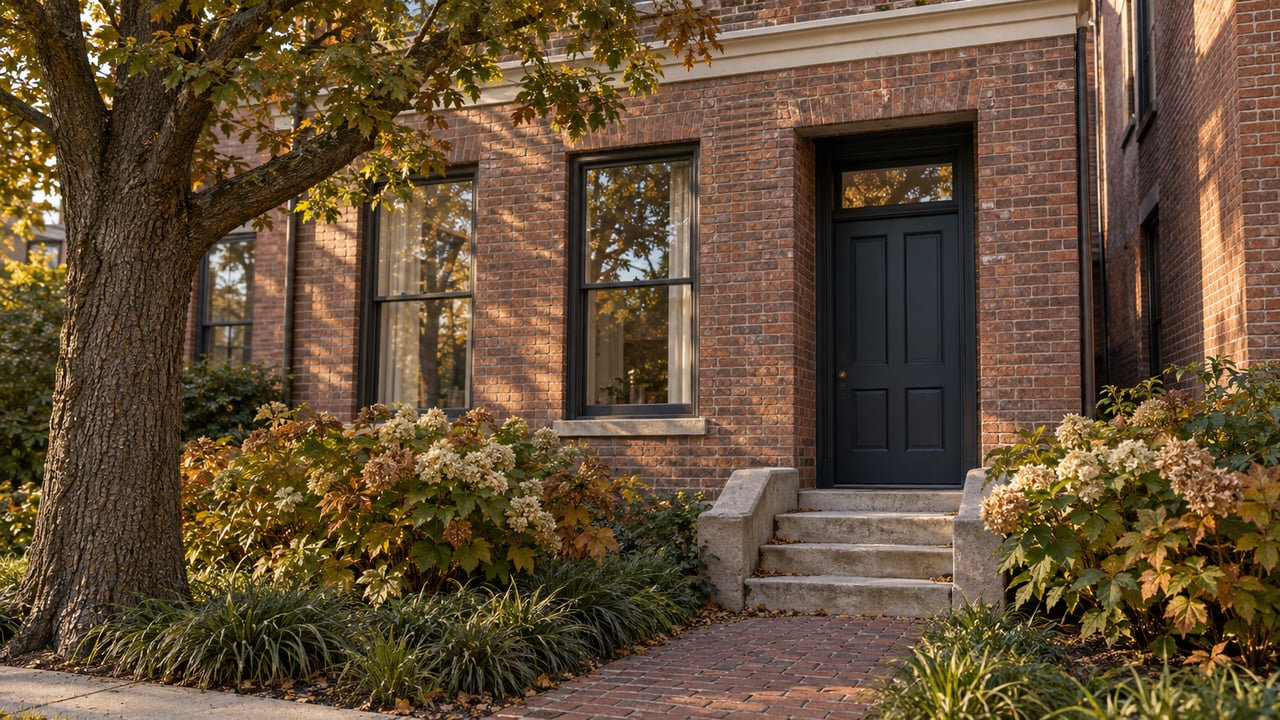
Most Old Town sellers plan around the spring market. The photographer books in March, the stager stages in April, the sign goes up the first weekend of May. That sequence works fine in Rosemont or Cameron Station. Inside the Old & Historic Alexandria District or Parker-Gray, it can quietly cost you the season.
The reason is procedural, not aesthetic. Anything visible from a public way, and any demolition of more than a small patch of exterior material, has to clear the city's Board of Architectural Review before a permit is even issued. That approval runs on a calendar you do not control, and it is the single most common reason a well-prepared listing slips from May to July.
The friction that shows up at the inspection table
The problem is rarely a seller who plans a renovation and forgets to file. The problem is the seller who inherited a house with a previous owner's unpermitted work, or who replaced a rotted window five years ago with a same-size vinyl unit and never thought about it again. A buyer's inspector notices. The buyer's agent asks for the Certificate of Appropriateness. There isn't one.
At that point the leverage flips. Under Alexandria's rules, unapproved exterior changes visible from the street can trigger a stop-work order, fines, and an order to restore the property to its previously approved condition. Buyers know it. Their lender's underwriter can be made to know it. What was a $15,000 credit request becomes a contingency to reopen the review process, and reviews take weeks.
This is the friction to plan around. Not the price. Not the staging. The record.
What actually needs BAR sign-off
The scope is broader than most sellers assume. The Board is charged with approving a Certificate of Appropriateness for all new construction and exterior alterations on structures visible from a public way, and a Permit to Demolish is required for any proposed demolition of more than 25 square feet of material on a structure, regardless of the visibility from a public way. That last clause catches people. A rear wall you cannot see from the sidewalk still falls under the demolition rule.
A few common items that reliably require review:
- Full window replacement, or any change to material, size, or muntin pattern
- Front door replacement, and in many cases repainting
- Roof material changes and visible skylights or dormers
- Painting historically unpainted brick, which is often discouraged and requires review; the BAR may not approve coatings that could damage historic masonry
- Rear additions, decks, and rooftop equipment visible from a public way
Repointing, in-kind repair, and interior work generally do not. When in doubt, the honest answer is to ask staff before you order materials.
The timeline sellers underestimate
The Board meets at 7:00 pm on the first and third Wednesday of each month except August. That August gap matters if you are aiming at a Labor Day relaunch. Beyond the meeting calendar, here is what preservation-experienced contractors in Old Town describe as realistic:
| Path | Typical duration |
|---|---|
| Staff administrative approval, minor item | A few days to a few weeks |
| Full BAR public hearing, from submission to decision | 4 to 8 weeks |
| Common exterior window or door project, concept to permit | 2 to 4 months |
| Denied application, same case | Cannot be reheard for one year |
Those windows are drawn from published guidance on the process, including the industry summary that plan for 4 to 12 weeks for review and permits depending on scope, and the city's own procedural rule that in the rare cases where the Board denies an application, the same case cannot be heard again by the Board for a period of one year. A denial in March is not a setback. It is next spring.
What a recent hearing tells you about the room
Sellers sometimes assume the BAR is a rubber stamp for anything tasteful. It isn't. In November 2025, a 32-townhome proposal at 333 N. Fairfax Street returned to the Board with revised renderings and did not receive a vote during the public hearing. After a lengthy discussion that included two public comments pressing the body to reject the proposal, Board Chair Nastaran Zandian said it "still needs a lot of work." Members asked for more diversity across aspects like building height, window size and brick color.
That was a well-capitalized applicant with professional renderings and a design team. The takeaway for an individual seller is not that the Board is difficult. It is that the Board reads details. Muntin patterns, brick color, sash proportions. If you are proposing a change, the drawings and physical samples have to be right the first time, because a deferral costs a meeting cycle at minimum.
The Virginia disclosure trap
Virginia is a caveat emptor state. On the standard Residential Property Disclosure Statement, the seller makes no representations to any matters that pertain to whether the provisions of any historic district ordinance affect the property, and the buyer is directed to do their own diligence. Sellers sometimes read that as a general shield. It isn't.
Under Va. Code § 55.1-706, if the owner has actual knowledge of a pending enforcement action under the Uniform Statewide Building Code that affects the safe, decent, sanitary living conditions of the property, and has received written notice from the locality, the owner is required to disclose it. A pending city notice about unapproved exterior work is exactly the kind of item that turns a caveat emptor default into an affirmative obligation. Sellers who assume the disclosure form makes an open code case go away are misreading the statute.
The practical move is to pull your property's file from the city before a listing agreement, not after a ratified contract.
Why 2026 makes this more expensive to get wrong
Alexandria's 2026 outlook rewards well-prepared listings and punishes rushed ones. The Northern Virginia Association of Realtors and George Mason University's Center for Regional Analysis project single-family median sale prices in Alexandria to rise 4.2% over the coming year, with sales up 4.5% and inventory rising 32.7%, which is the highest projected rate of price appreciation among localities studied, followed by Arlington at 3.8%.
The 32.7% inventory jump is the number sellers should read carefully. It is coming off a very tight base, but the pattern within the year matters. A house listed in April competes with a smaller pool than a house listed in September. Redfin's data through April 2026 already shows median days on market at 31 days compared to 25 days last year. In a market inching from seller-favored toward balanced, an unresolved exterior compliance issue is exactly the kind of friction that turns into a price concession rather than a competing offer.
A pre-listing sequence that respects the BAR calendar
For a target list date of late April, working backward:
- October to November. Pull the property's permit history from the city. Note any exterior work done during your ownership without a Certificate of Appropriateness.
- November to December. Email Preservation staff a short list of proposed pre-sale exterior work, photographs, and any question about historical items already in place. Ask whether each qualifies for staff approval or requires a full hearing.
- December to January. Commission scaled elevations, material samples, and cut sheets for anything heading to the Board. Photos alone are not enough.
- January to February. File. If a hearing is needed, aim for a February or early March docket to leave room for one deferral.
- March. Execute the approved work. Order long-lead custom windows and doors early.
- April. Photograph, stage, launch.
Sellers who begin in March do not have this sequence available to them. They have the version that starts with a permit search on day one of the listing agreement and ends with a buyer's inspector asking a question no one wants to answer.
FAQ
Does an interior renovation need BAR approval? Generally no. The Board's authority is over exterior alterations visible from a public way, plus demolitions above the 25 square foot threshold. A kitchen remodel, absent structural exterior changes, is a building permit matter, not a BAR matter.
Is Rosemont regulated the same way as Old Town? No. Rosemont is a National Register historic district but not a local historic district regulated by the city through the BAR. Only two districts, Old and Historic Alexandria and Parker-Gray, are regulated locally. National Register status alone does not trigger a Certificate of Appropriateness.
What if I already did work without approval? Talk to Preservation staff before you list, not after. A retroactive application is possible in many cases and is far less damaging on your terms than under a ratified contract with a closing date.
Can I sell "as is" and let the buyer deal with the BAR? You can market that way, but the disclosure obligations under § 55.1-706 do not disappear, and buyers who understand the district often price the risk aggressively. A cleaner record almost always nets more than a discount.
If you own a home inside the Old & Historic Alexandria or Parker-Gray district and are thinking about a 2026 listing, the first conversation is worth having in the fall, not the spring. Kristen Jones Real Estate works alongside preservation-experienced architects and contractors to sequence exterior approvals against a target list date, so the calendar works for the sale instead of against it. Request your complimentary home valuation and we will build a preparation timeline that starts with your property's record, not a stock checklist.